Leidenstadt Lyrics: Exploring Morality and Destiny in Goldman's Work
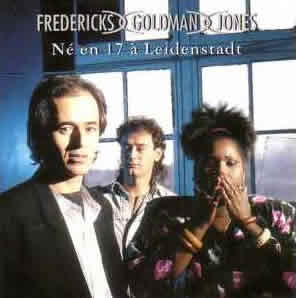
Jean-Jacques Goldman, a titan of French music, is renowned for his insightful lyrics that delve into profound human experiences. Among his most celebrated and thought-provoking compositions is "Né En 17 À Leidenstadt," a powerful ballad that challenges listeners to confront their own potential for good or evil when faced with extreme circumstances. The song, performed by Fredericks, Goldman, and Jones, transcends its specific historical references to ask universal questions about identity, fate, and the choices that define us. For fans seeking the poignant words that spark such deep introspection, understanding the
Paroles Né En 17 À Leidenstadt reveals a masterclass in lyrical storytelling and moral philosophy.
At its heart, "Né En 17 À Leidenstadt" is a profound thought experiment. It invites us to step into the shoes of individuals born into historically charged environments, forcing us to consider how our character might be shaped by the very fabric of our upbringing. This article will explore the layers of meaning within Goldman's lyrics, examining the challenging scenarios presented and the timeless questions they raise about the human condition.
The Evocative Power of "Leidenstadt": A Hypothetical Birth
The central premise of the song immediately grips the listener:
Et si j'étais né en 17 à Leidenstadt
Sur les ruines d'un champ de bataille
Aurais-je été meilleur ou pire que ces gens
Si j'avais été allemand?
"Leidenstadt" itself is a brilliant lyrical invention. Not a real place, its name cleverly combines "Leiden" (German for suffering) and "Stadt" (German for city), creating a powerful metaphor for a city born of anguish and conflict. The year 1917 places this hypothetical birth squarely in the midst of World War I, in a Germany that would soon face crushing defeat, national humiliation, and the seeds of future extremism.
Goldman's genius lies in posing the direct question: "Would I have been better or worse than those people?" This isn't just about historical figures or abstract groups; it’s a deeply personal challenge. It forces us to acknowledge that had our birthplace and historical context been different, our moral compass might have been calibrated in ways we can barely imagine from our present vantage point. The lyrics continue to probe this uncomfortable truth:
Bercé d'humiliation, de haine et d'ignorance
Nourri de rêves de revanche
Aurais-je été de ces improbables consciences
Larmes au milieu d'un torrent
This paints a vivid picture of a childhood steeped in the bitter aftermath of war, where narratives of vengeance and resentment could easily overshadow empathy. The "improbables consciences" are those rare, courageous souls who manage to resist the dominant ideology, becoming "tears in the middle of a torrent" – a small, vulnerable sign of humanity against a flood of hatred. This section of the
Paroles Né En 17 À Leidenstadt powerfully reminds us that moral courage often means standing alone, against the prevailing tide. It challenges us to reflect on whether we possess the inner strength to be such a consciousness. For a broader look at the song's enduring legacy, explore
Jean-Jacques Goldman's 'Né En 17 À Leidenstadt': A Timeless Reflection.
Beyond Borders: Universalizing Moral Dilemmas
Goldman doesn't stop at the German experience; he masterfully extends the thought experiment to other historical hotbeds of conflict, demonstrating the universality of his theme.
The Sectarian Divide of Belfast
Si j'avais grandi dans les docklands de Belfast
Soldat d'une foi, d'une caste
Aurais-je eu la force envers et contre les miens
De trahir: tendre une main
Here, the focus shifts to the sectarian violence that plagued Belfast, particularly during "The Troubles." Growing up in the docklands often meant being born into a specific community, where identity was inextricably linked to religion and political allegiance – becoming a "soldier of a faith, of a caste." The powerful question arises: would one have the strength "against one's own" to "betray" them by extending a hand to the perceived enemy? This highlights the immense courage required to break cycles of conflict and reach across dividing lines, often at great personal cost. It underscores the profound difficulty of choosing peace when loyalty demands strife.
Privilege and Injustice in Johannesburg
Si j'étais née blanche et riche à Johannesburg
Entre le pouvoir et la peur
Aurais-je entendu ces cris portés par le vent
Rien ne sera comme avant
The final geographical scenario takes us to apartheid-era Johannesburg, from the perspective of someone "born white and rich." This particular angle addresses the moral blindness that often accompanies privilege and power. Surrounded by comfort and security, would one truly hear "the cries carried by the wind" – the suffering and injustice endured by the oppressed majority? The phrase "Rien ne sera comme avant" (Nothing will be as before) hints at the inevitable shift and the moral awakening that such a choice demands. This stanza pushes listeners to examine their own positions of privilege and whether they actively listen to and acknowledge the suffering of others, rather than remaining comfortably ignorant. These diverse scenarios underscore that moral dilemmas are not confined to specific histories but are inherent to the human experience across cultures and times.
The Unveiling of Self: Confronting Inner Truths
Perhaps the most unsettling and revealing part of the song lies in its exploration of the unknown depths of our own character:
On saura jamais c'qu'on a vraiment dans nos ventres
Caché derrière nos apparences
L'âme d'un brave ou d'un complice ou d'un bourreau?
Ou le pire ou plus beau?
Serions-nous de ceux qui résistent ou bien les moutons d'un troupeau
S'il fallait plus que des mots?
These lines are a stark reminder that our public personas might conceal a spectrum of potential actions, from the heroic to the horrifying. We can never truly know "what we truly have in our bellies" until tested by fire. Are we capable of being "the soul of a brave man, or an accomplice, or an executioner?" Goldman confronts the terrifying possibility that, under certain pressures, even seemingly good people could become instruments of evil, or conversely, that hidden reserves of courage might emerge. The choice between being "one of those who resist" or "the sheep of a flock" is a fundamental human decision, especially "if it took more than words" – meaning, when actions, not just intentions, are required. This introspection into our latent capabilities is a cornerstone of the song's enduring appeal. To delve deeper into the profound questions of choice and identity posed by this masterpiece, read
What If? Leidenstadt's Powerful Questions on Choices and Identity.
The Plea for Neutrality: A Shared Hope
The song culminates in a powerful plea, which is both a wish and a warning:
Et qu'on nous épargne à toi et moi si possible très longtemps
D'avoir à choisir un camp
This final sentiment resonates deeply, expressing a universal desire to avoid circumstances that force us to make agonizing moral choices, to "choose a camp" in a conflict. It's a wish for peace, for stability, and for a world where such stark divisions are not imposed upon individuals. While acknowledging the human tendency towards division and conflict, Goldman articulates a hope that we, the listeners, might be spared from such defining and often traumatic decisions. It's an unspoken prayer for a life where moral courage can be cultivated through everyday kindness rather than demanded by the crucible of war or injustice. This plea serves as a poignant conclusion, reminding us of the fragility of peace and the value of circumstances that allow for moral freedom.
Conclusion
"Né En 17 À Leidenstadt" remains a timeless masterpiece, a testament to Jean-Jacques Goldman's unparalleled ability to weave complex philosophical questions into accessible and emotionally resonant music. The
Paroles Né En 17 À Leidenstadt are far more than just lyrics; they are an invitation to self-reflection, a historical empathy exercise, and a profound exploration of what it means to be human. By daring to ask "what if," Goldman compels us to examine our own biases, privileges, and the depths of our moral character. In an increasingly polarized world, the song's message of understanding the forces that shape individual choices, and the desperate plea to avoid having to choose a side, is more relevant than ever. It encourages us to cultivate empathy, question narratives, and strive for a world where humanity's best qualities can flourish without the shadow of forced allegiance.